
Exploring a New Dimension of Self-Awareness
InnerVerse


Reflection is more powerful than tracking.
Instead of focusing on "daily logging" or rigid tasks, simply allowing users to walk through their emotional landscapes led to a deeper sense of emotional connection — and relief.
Emotions are non-linear, and design must be too.
Users didn’t experience their feelings in neat steps — joy, sadness, confusion could overlap. Designing InnerVerse taught me that emotional journeys aren’t linear, so the experience needed to feel open-ended, allowing users to come and go, reflect or just observe, without forcing a "path" or "progress."
Personalization matters more than perfection.
What users valued most wasn’t how "perfectly accurate" the world was, but how personal it felt. Giving them choices during onboarding and in how they express themselves made the experience feel safer and more "theirs."
Simplicity creates emotional safety.
Overloading users with too many features or check-ins made the app feel like "work." Gentle prompts, minimal UI distractions, and slow, ambient animations helped users breathe inside the app.
What did I learn from this project?
Problem Statement
How might we hold space for emotions to be felt and understood, without needing to fix or define them?
InnerVerse holds space for the messy, beautiful, and ever-changing landscapes within us...
because being human was never meant to be perfect!
Projected Impact
InnerVerse has the potential to reshape how people engage with their emotions by making emotional reflection more intuitive, creative, and compassionate. Instead of approaching mental health like a checklist, it invites users to build a lasting relationship with their inner world one that's free of judgment, labels, or pressure.
Potential 3x higher retention compared to traditional mood trackers
Traditional mental health apps have a 30-day retention rate of 3–8%. Wellness apps that personalize experience and reduce pressure see 3× higher retention (~20–25%).
CB Insights "State of Mental Health Apps Report"
Because InnerVerse personalizes onboarding, input methods, and visual feedback, it's projected to significantly improve engagement and long-term retention compared to standard journaling/mood apps.
increase in emotional self-awareness
Studies show that expressive writing, voice journaling, and creative self-expression (like drawing or speaking emotions) can increase emotional self-awareness by 30–40%.
Pennebaker, "Expressive Writing and Emotional Processing"
InnerVerse, by offering multimodal journaling and passive mood reflection, can achieve similar or better outcomes because it reduces entry barriers (users can speak, write, or use images instead of formal journaling).
30-40%
decrease in self-reported emotional fatigue
Research indicates that when mental health tools reduce task pressure and rigid routines, users report 20–30% less emotional fatigue.
American Psychological Association, "Behavioral Interventions for Emotional Health"
By removing checklist-style mood tracking and replacing it with exploration, users are less likely to feel burdened and more likely to engage naturally.
25%
improvement in emotional reflection habits after 4 weeks
Apps that encourage open-ended emotional exploration (instead of structured tracking) have shown a 35–50% increase in weekly self-reflection practices over one month.
JMIR Mental Health, "Mobile Interventions for Mental Health: Meta-analysis"
InnerVerse, with its visual world-building, floating memory bubbles, and personalized experiences, makes daily or weekly emotional reflection feel more like self-discovery rather than a chore.
35-50%
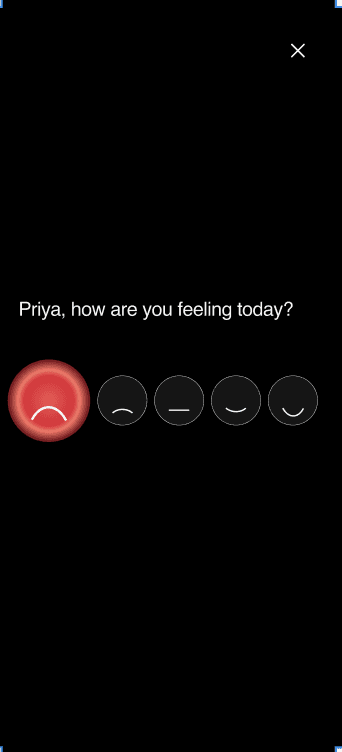
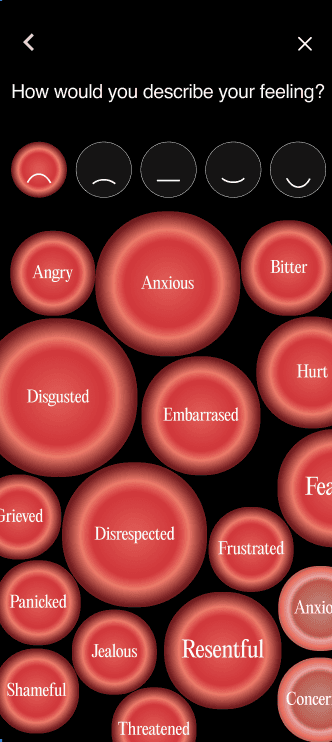
To capture feelings & emotions:
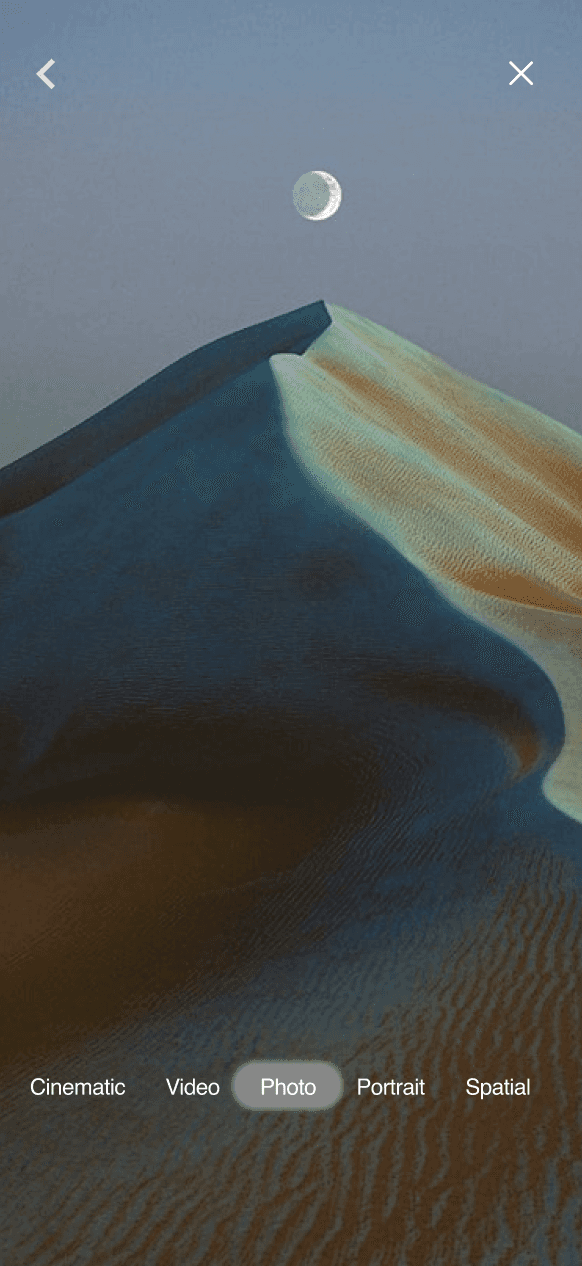
To access more ways to journal:
To empower beyond journaling:
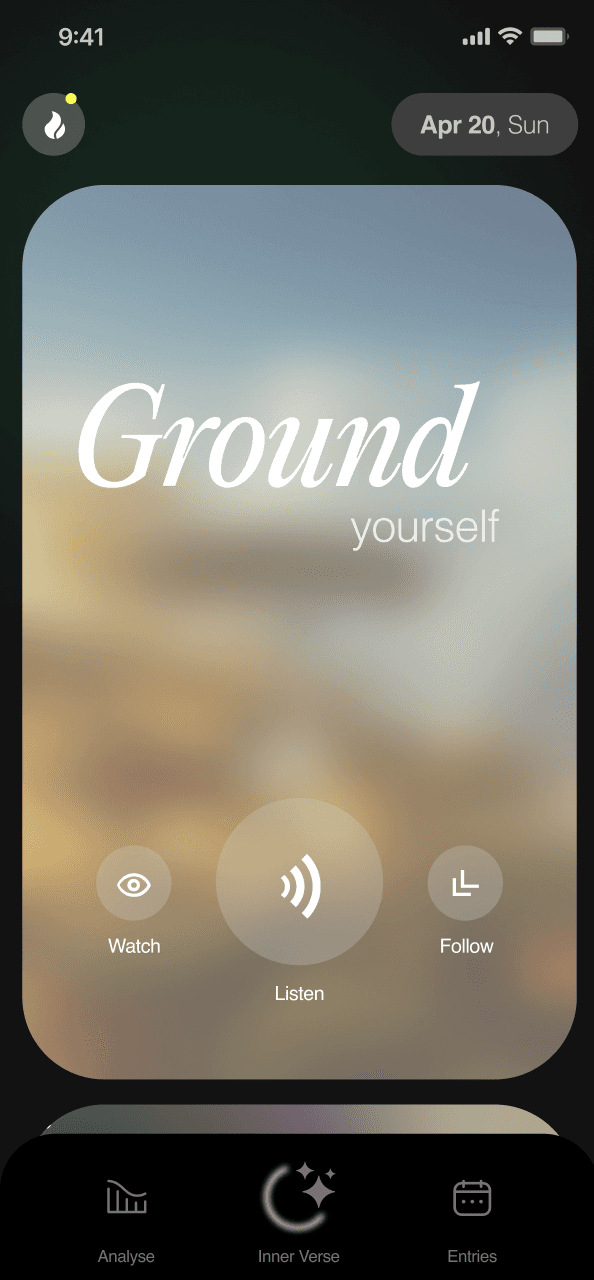
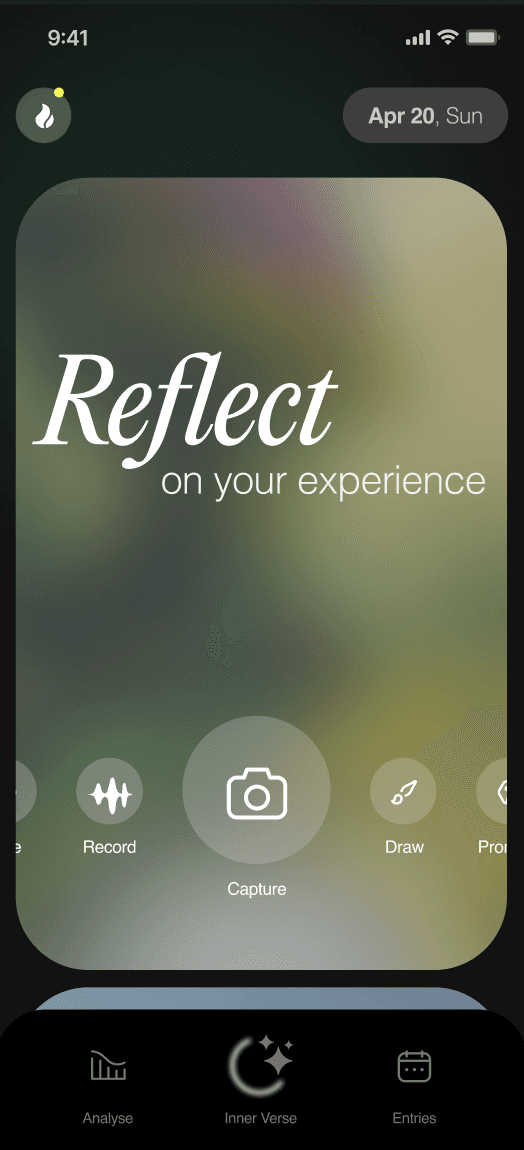
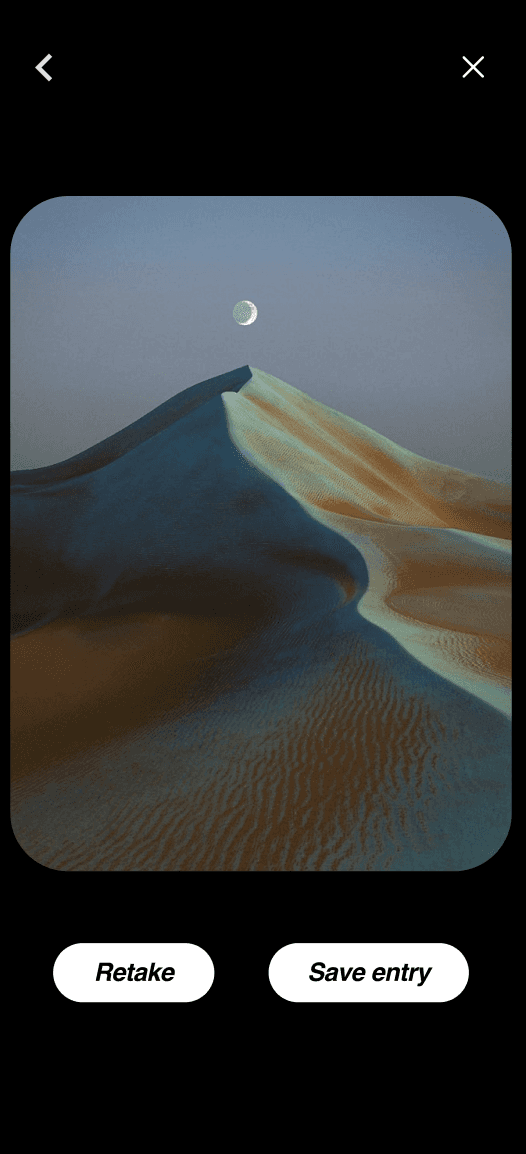
Peter’s journey begins with a welcoming, thoughtful onboarding experience.
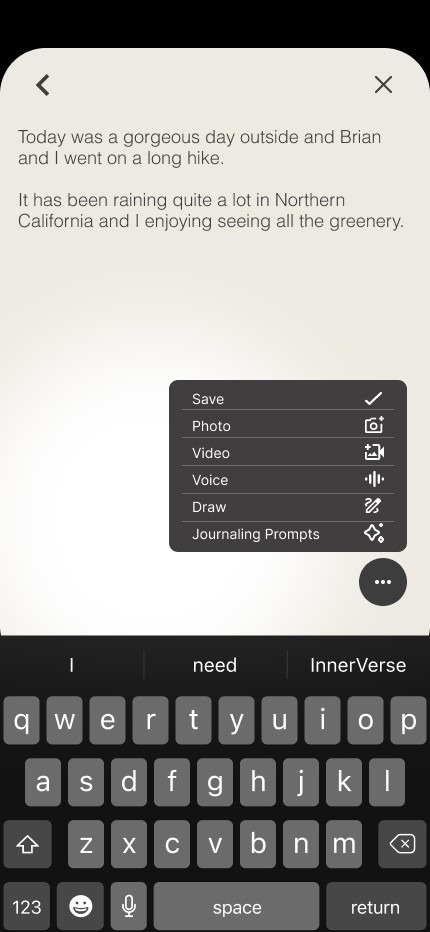
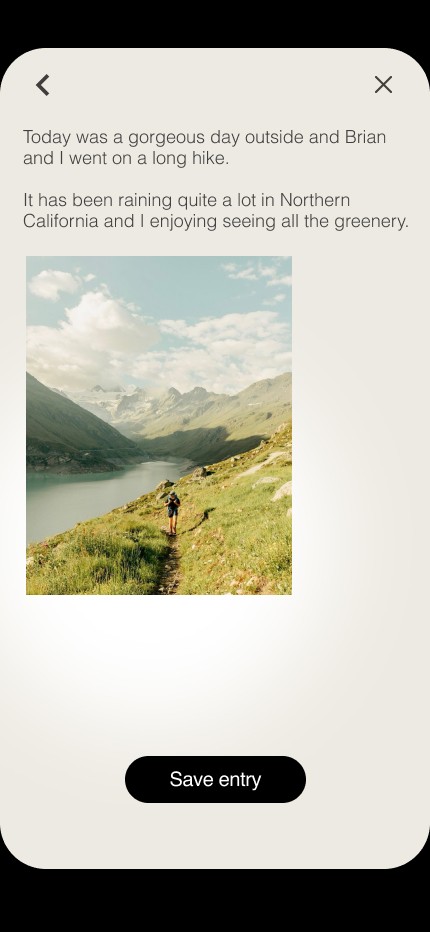
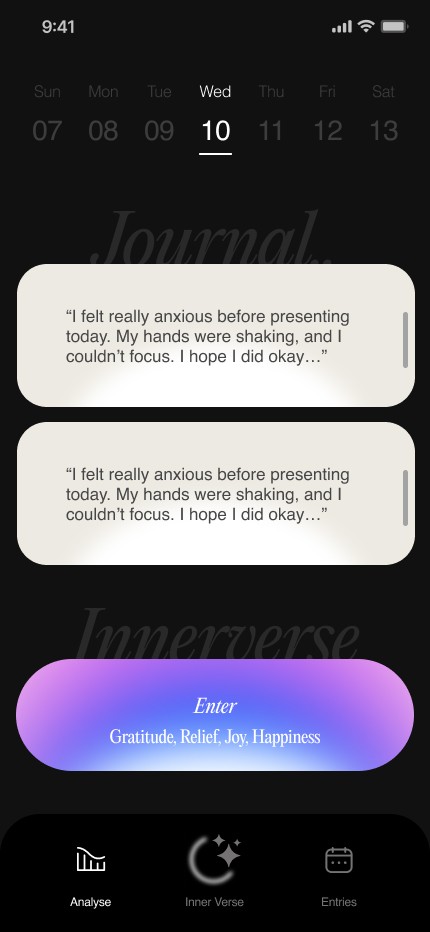
Throughout the day, Peter expresses himself in small ways like recording a voice note, taking a spontaneous selfie and jotting a few reflective words. Meanwhile, his wearable passively captures a spike in his heart rate during a tense moment.
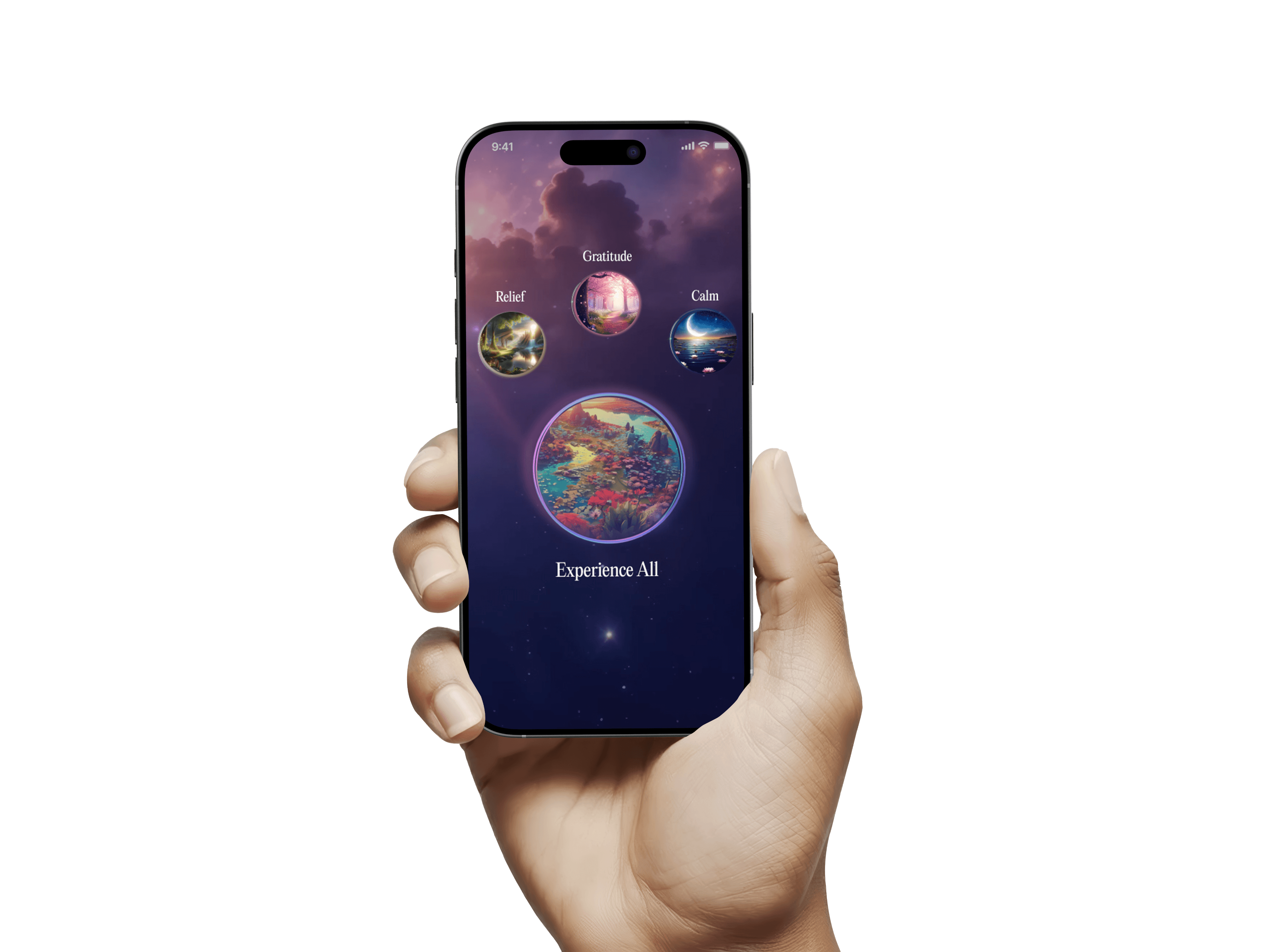
When Peter enters his InnerVerse that evening, he steps into an immersive, evolving emotional landscape. Floating memory bubbles hold his voice notes, images, heartbeat data, and journal moments. Each bubble gently drifts by, waiting for Peter to engage or simply observe.
If Peter’s emotions show signs of distress, InnerVerse gently steps in offering calming support resources and softly restricting access to overwhelming emotional landscapes to protect his wellbeing.


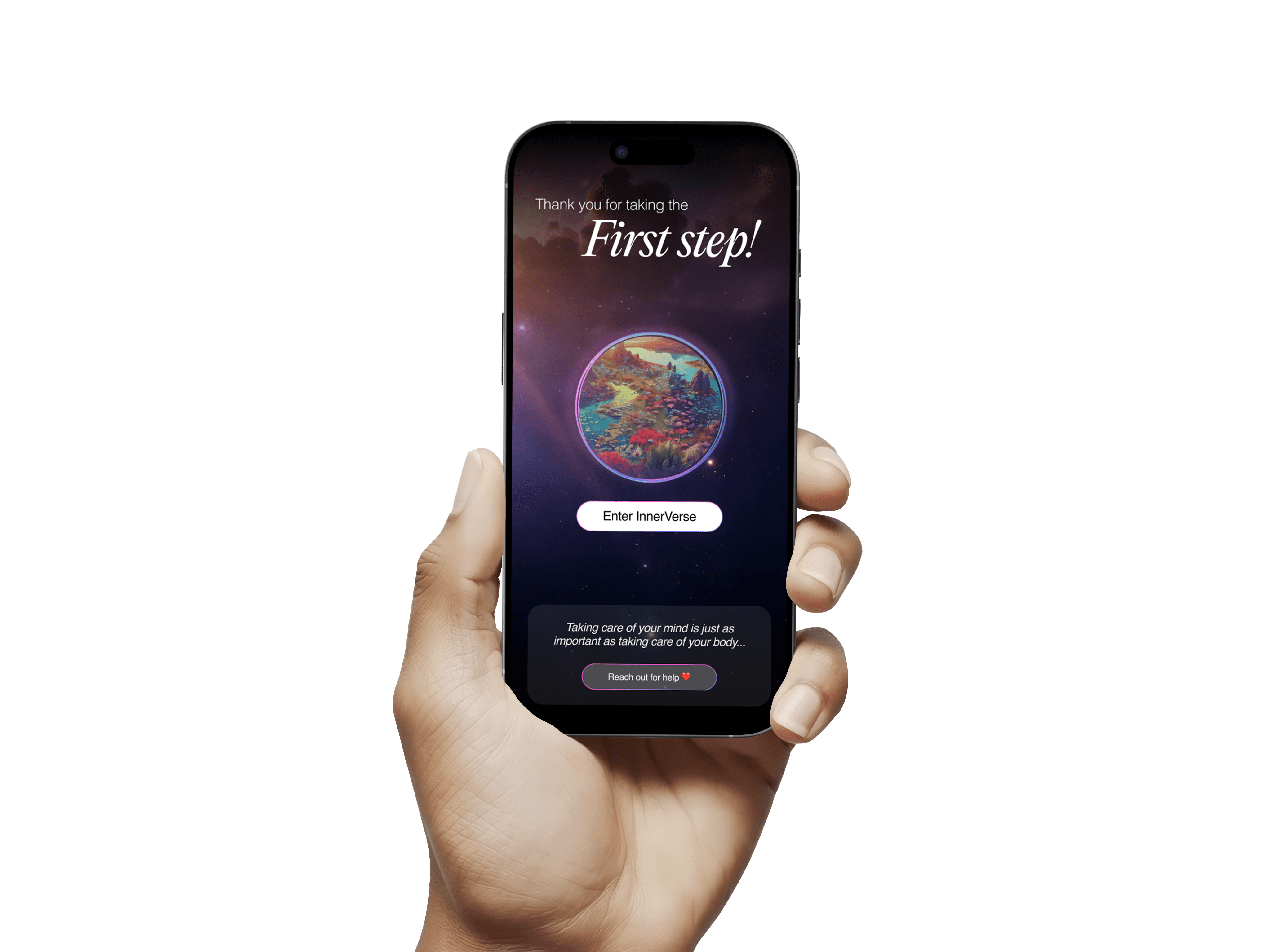
Introducing
Inner
Verse
We knew from the start: InnerVerse had to be more than another tool.
It needed to be a gentle companion, one that...
Welcomes all emotions without judgment
Reflects feelings visually and intuitively, rather than forcing labels
Encourages natural emotional reflection, not perfection
Offers multiple ways to express (writing, speaking, images, wearable data)

InnerVerse was built for people like Peter, who don't need fixing just a place where their emotions can exist freely.
If there was a way to see my feelings without having to write paragraphs, I would definitely use it.
“
Seeks non-verbal ways to express himself
Looks for gentle emotional check-ins, not rigid tracking
Avoids traditional journaling apps
Living alone; recently moved from Korea
“

International student pursuing Masters | San Francisco, CA

Key insights from our 1:1 interviews
Words are often not enough
People crave ways to express and process their emotions that go beyond language through visuals, movement, or simply "being."
Emotional reflection needs to feel gentle, not performative
There is a pressure by traditional tools to always "track" or "fix" their emotions, rather than honor them.
There’s a strong desire for emotional tools that feel natural, validating, and creative not clinical, overwhelming, or task-driven.
People need safe, intuitive spaces for self-awareness.

"I know I’m feeling something, but sometimes I just don’t have the words for it."
"Not every feeling fits into 'happy,' 'sad,' or 'angry'. It’s way more complicated than that."

"Tracking emotions daily makes me feel like I'm being judged for feeling bad."

"If there was a way to see my feelings without having to write paragraphs, I would definitely use it."
"Sometimes I wish my feelings could just be seen like a painting, or a place without me needing to put it into words."

"The pressure to label my emotions makes me avoid using mental health apps altogether."



Understand how people currently express or track emotions
Identify frustrations with existing mood-tracking or journaling tools
Explore how people want to feel when engaging with their inner emotional world
Research Goals


Emotional health starts with self-awareness, not just words and labels.
Support should feel human, validating, and creative not clinical.
In a busy world, people need gentle, intuitive ways to stay connected to their feelings.
Why this problem matters?

61% of young adults report feeling "emotionally numb" or unable to describe how they feel.
American Psychological Association, Stress in America Survey, 2022
76% of people abandon journaling apps within the first week due to difficulty staying consistent or not knowing what to write.
CB Insights, App Engagement Report, 2023
1 in 4 Gen Z users say they struggle to process emotions in the digital age due to overstimulation and information overload.
Deloitte Global Gen Z & Millennial Survey, 2023
Overview
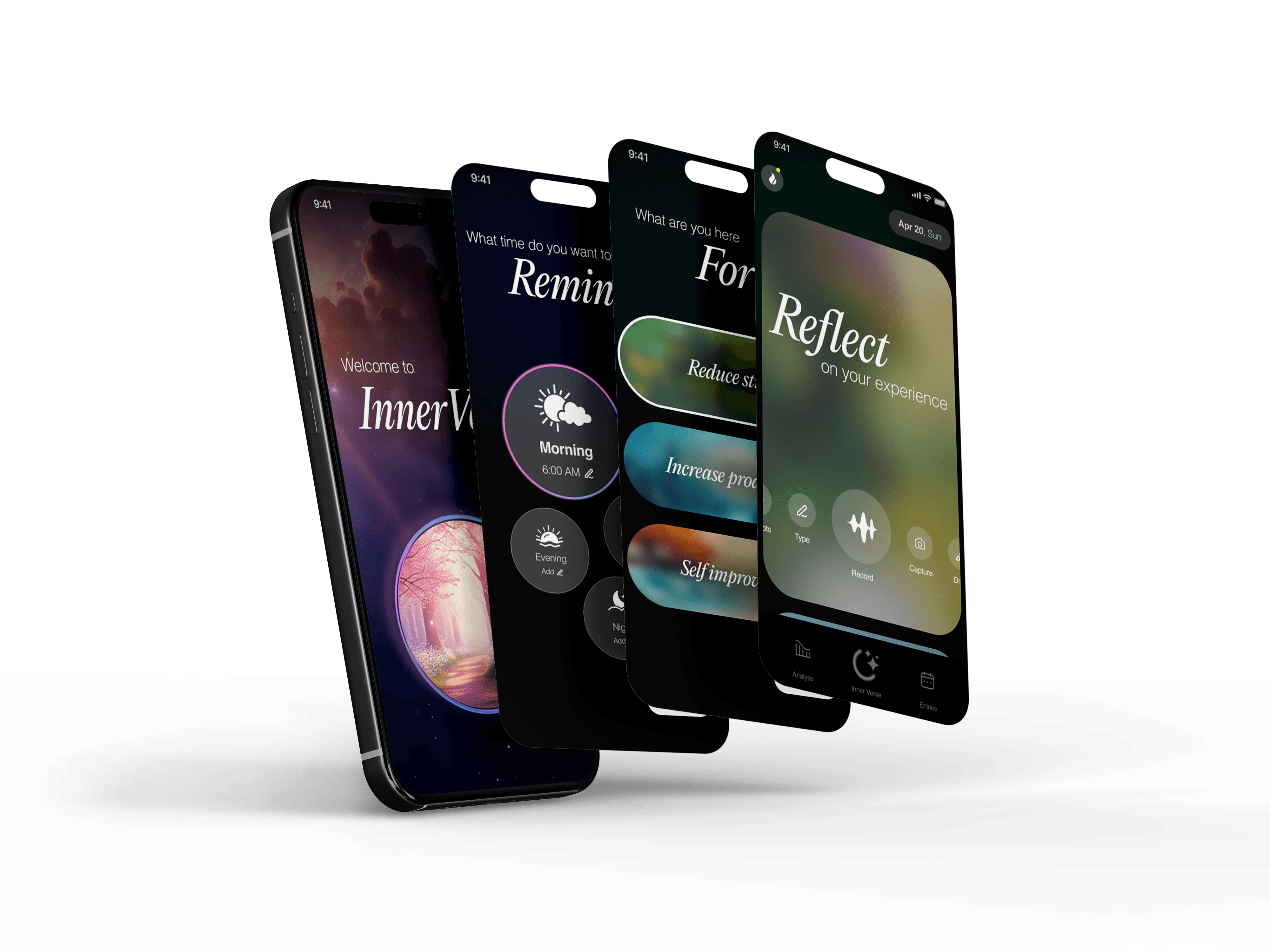
InnerVerse is a magical, AI-powered app where emotions are transformed into living, evolving 3D worlds. Instead of forcing people to label their feelings with words or rigid mood scales, InnerVerse invites users to experience their emotions through visuals, sounds, and creative interaction.
By speaking, writing, adding images, or syncing wearable data like heart rate and stress levels, users can watch their emotional landscapes unfold naturally offering a new way to reflect, explore, and grow.
InnerVerse isn't about fixing emotions. It's about feeling them fully with wonder, not judgment.
Hats worn
Experience Designer
Researcher
Visual Designer
Tools
Figma
Illustrator
Photoshop
Team
Yashswee Sinha
Priya Chandra
Sayya Dushanbieva
Sanvithi Saya
Timeline
FigBuild 2025
(Figma’s first multi-campus design-a-thon for 3 days)
Scrolled till here?
Don’t be a stranger. Let’s Talk.


This portfolio is a living, breathing work-in-progress just like me. Evolving as I grow through design and life :)
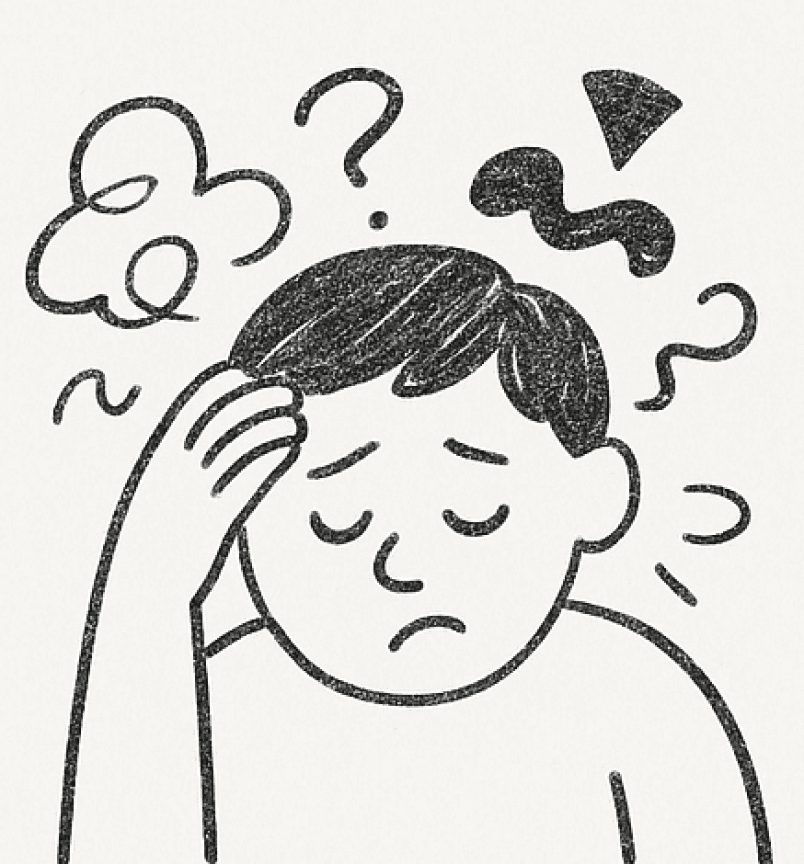
People struggle to put their emotions into words
Tracking mental health feels like a task to complete.
When people can’t define their emotions, they often feel unseen or disconnected.
Many people struggle to understand what they are feeling,